
 2026-02-24
5 Read
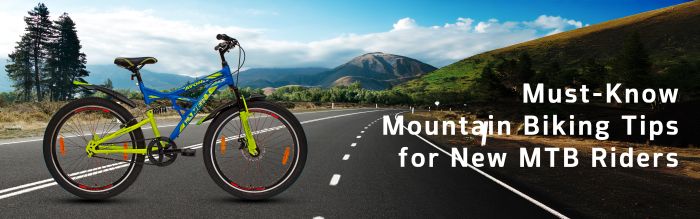
Starting with an MTB feels exciting for about ten minutes. Then the trail gets uneven. The tyres sound louder than expected. The first incline shows up. That’s when most new riders realise a mountain ride is different from a smooth city commute.
An MTB bicycle is built for unpredictability, but the rider still has to learn how to move with it.
New riders often test speed before they understand control. That rarely ends well. A good habit is to spend the first few rides just getting used to how the MTB cycle reacts. Notice how it turns. Feel how the brakes respond. Understand how the tyres grip loose soil.
Speed comes later. Control comes first.
Gears are your quiet helpers. If the slope is visible ahead, shift early. Waiting until your legs are already heavy makes balance harder to maintain.
Most modern MTB bicycles make shifting simple, but timing matters more than technology. The smoother the shift, the steadier the ride.
Some stretches need you off the saddle. Small bumps, rough patches, or shallow descents feel more stable when the body absorbs movement instead of the seat. It takes a little practice, but it changes how confident an MTB feels under you.
New riders often sit through everything. Standing occasionally makes the ride lighter on both bike and body.
It’s natural to look at the front wheel when the surface turns rocky. The problem is balance follows your eyes. Looking further ahead helps the body prepare for what’s coming.
Experienced riders on any MTB cycle focus on the next few metres of trail. Not the tyre. Not the pedals. The path.
Tight hands lead to stiff arms. Stiff arms make every bump feel worse. Relaxing the shoulders and loosening the grip helps the bike move naturally over uneven terrain.
A good MTB bicycle is designed to handle shock. Let it.
This sounds basic, but it saves trouble. Brake pressure. Tyre firmness. Chain condition. A quick check takes two minutes.
Brands like Avon Cycles build durable MTBs for Indian conditions, but even the strongest bike needs attention. New riders who build this habit early avoid most small mechanical issues.
People start riding for fitness. They stay for other reasons.
How MTB Riding Helps becomes clear after a few consistent weeks. Balance improves. Reflexes sharpen. Confidence grows. There’s also something steady about navigating a trail that doesn’t behave exactly the same every day.
For students and office-goers, an MTB becomes more than transport. It becomes a break between responsibilities. A small reset.
Every rider falls once. Misses a shift. Brakes too hard. Takes a turn too wide.
Mountain biking isn’t about perfection. It’s about progression. The more time spent on an MTB cycle, the more natural it feels.
 2026-10-05
5 Read
 2026-10-05
5 Read
 2026-10-01
5 Read
.jpg) 2026-09-28
2026-09-28
5 Read
 2026-09-08
5 Read
 2026-09-07
5 Read
 2026-09-03
5 Read
 2026-08-22
5 Read
 2026-08-21
5 Read
 2026-07-31
5 Read