
 2026-03-24
5 Read
The electric cycle did not ask for permission. It just showed up, slipped past the traffic jam on your usual Monday morning route, and made everything else look exhausting by comparison. Daily commuters noticed first. Then the weekend riders. Then everyone else, the ones who filled their tanks last Tuesday and stood at the pump watching the number climb past what felt reasonable, doing quiet arithmetic in their heads. The answer kept coming out the same. An electric cycle is not a lifestyle product for the enthusiastic. It is the logical conclusion of a calculation millions of people are already running. Trends fade. Logic does not.
Mass production drove costs down significantly, and the result is a thriving market where an electric cycle under 15000 is genuinely within reach for most Indian households.
Revolutionary. That is the only word for it.
Yes, the environment. CO2 per kilometre, cleaner air, all of it real and all of it worth saying. But here is the thing nobody puts in the headline: traditional fitness logic says effort produces results. An electric cycle interrupts that logic just enough to make it work better. The assistance is there, so riders go further. Because they go further, they ride longer. Because they ride longer, the cardiovascular work accumulates in ways a shorter, harder ride on a conventional bicycle simply cannot replicate. The electric cycle does not make you lazy. It makes you consistent. Consistency is the thing that actually changes fitness.
Technology that actually helps.
Most electric cycles today connect seamlessly with fitness tracking applications, offering real-time analysis of calorie burn, travel time based on pedaling rate, and performance trends over weeks and months. Riders set smarter goals. Riders track real progress. The electric cycle becomes part of a broader, data-informed lifestyle rather than just a mode of transport.
Empowering. Genuinely.
Time. Saved.
City riding is full of interruptions. Signals. Lane changes. Unexpected stops that stack up and stretch a ten-minute journey into twenty-five. Electric cycles provide the speed boost that keeps momentum alive, ensuring riders arrive on time and arrive without exhaustion. A relief, genuinely, for anyone who has pedaled uphill in Indian summer heat.
The commute gets smarter.
App integration for ETA planning, pedal assistance for steep terrain, the ability to weave through congested streets with greater agility than conventional cycles. An Avon electric cycle transforms the daily commute from a chore into something that actually feels considered and efficient. The road does not change. The experience of riding it does.
Costs come down. Significantly.
Petrol prices do not apologise. They go up, stay up, and the neighbourhood grocery run that cost forty rupees last year costs sixty now. An electric cycle absorbs that math entirely. Errands. Gym. Market. The car stays parked, the wallet stays fuller, and the justification for the purchase pays for itself faster than most people expect. Practical is the new exciting.
The market is full of options. That is wonderful and also, slightly overwhelming. Here is what actually matters.
Weight.
Twenty kilograms is the number. Below it, the electric cycle belongs to you, fits into your life, slides onto a rack, leans against a wall without negotiation. Above it, you start accommodating the bike rather than the bike accommodating you. Weight is the variable nobody photographs for the brochure and the first thing every experienced rider checks.
Range.
Range varies based on terrain, assistance level, and battery capacity. On flat roads at lower power settings, a good electric cycle can cover between 60 and 100 miles. Hilly terrain naturally reduces this. Understanding your typical daily distance helps narrow down which model fits best.
Speed.
Most electric cycles provide assistance up to 32 km/h, with advanced models extending support to 45 km/h. For city commuting, 32 km/h is more than sufficient. More than enough, actually.
Braking.
Disc brakes are the standard for quality electric cycles, and for excellent reason. They deliver consistent stopping power across all conditions, wet roads included, with precise modulation that gives riders genuine confidence on every terrain. Safety is not a feature. It is a foundation.
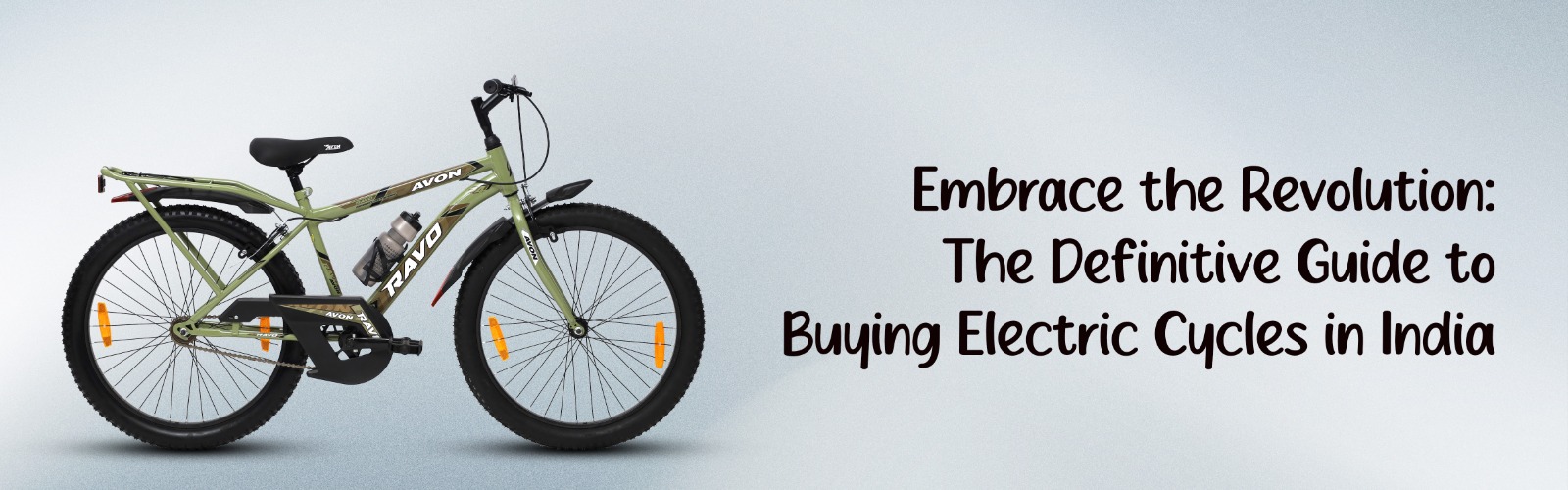
That name. Avon Cycle. In Indian cycling, it carries the kind of quiet authority that does not need to shout. The Cyclelec Connect I 26T. The Cyclelec Connect II 26T. The Cyclelec Connect Pro. These are not product names arranged in a list. They are three answers to three different versions of the same question: how do I ride well, ride reliably, and spend sensibly? Avon Cycle built its reputation before electric cycles existed. That is precisely what makes the Avon electric cycle interesting. Legacy and innovation occupy the same frame here, and neither one blinks.
For anyone specifically searching for an electric cycle under 15000, Avon answers that search without compromise. Not budget-grade. Not stripped-down. Just genuinely good, genuinely accessible, genuinely worth it.
The revolution is not coming.
It is already here, rolling quietly and confidently through Indian streets. An electric cycle is more than a purchase. It is a statement about how you choose to live, commute, and engage with the world around you.
Avon Cycle made that statement affordable.
Now it is your turn.
 2026-10-05
5 Read
 2026-10-05
5 Read
 2026-10-01
5 Read
.jpg) 2026-09-28
2026-09-28
5 Read
 2026-09-08
5 Read
 2026-09-07
5 Read
 2026-09-03
5 Read
 2026-08-22
5 Read
 2026-08-21
5 Read
 2026-07-31
5 Read