
 2026-02-24
5 Read
Bicycles have always meant one thing for sure, and that is freedom. The open road, trails cutting through forests, that fantastic feeling when momentum takes over.
Standard bikes handle their designated surfaces well. Road bikes own the pavement. Mountain bikes claim the trails. Each type stays in its lane.
Fat bikes refuse the assignment.
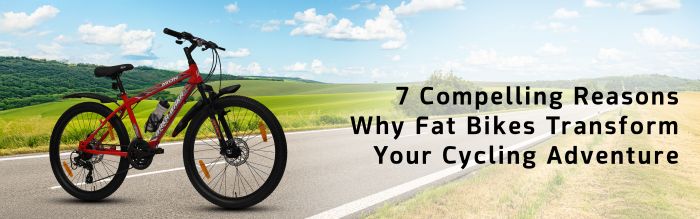
These machines feature tires so wide they look almost comical at first glance. The 3.8 to 5-inch rubber seems excessive until you ride one through snow. Or sand. Or mud that would stop anything else cold. They go about doing their business day in and day out.
Most bikes specialize. Fat bikes generalize intentionally.
Those massive tires dwarf everything else, taking everything in their stride. Road bike tires measure 25mm wide. Mountain bike tires run 2 to 2.5 inches. Fat bike rubber starts at 3.8 inches and climbs from there.
Core specifications:
Your car runs around 35 PSI. Road bikes pump to 100 PSI or higher. Fat tyre cycles operate at pressures so low they feel almost flat, yet that's exactly the point.
Spreading weight across more surface area means less pressure per square inch on the ground. Physics, basically.
Owning multiple bikes for different purposes makes sense until your garage becomes a bicycle parking lot.
Fat bike cycles collapse that problem.
Morning commute? Handles it. Weekend beach ride? Sand becomes a playground. Winter snow? Best riding season.
Terrain capabilities:
Regular bikes force choices. Fat bikes eliminate the decision tree. One bike, unlimited options.
The freedom shows up unexpectedly. Shortcuts through parks. That trail you always wondered about. Riding home despite fresh snowfall.
Balance on a bicycle comes from forward momentum and the contact patch between the tyre and the ground.
Fat bikes maximize that second factor dramatically.
Wide tires create a stable platform. The difference feels like standing on a floor versus a balance beam. One requires constant micro-adjustments, the other just feels solid.
New riders benefit obviously. Learning becomes less stressful. The wobbly phase shrinks considerably.
Experienced cyclists discover different advantages. Technical sections suddenly feel manageable.
Tire pressure determines ride quality before you start pedalling.
Road bikes run 90 to 130 PSI for efficiency. Great for speed, terrible for comfort. You feel every pebble.
Fat bikes operate at 5 to 20 PSI, making you float through the uneven terrains.
Lower pressure means kinder treatment. Suspension systems add weight, complexity, and cost. Fat tyre cycles provide suspension through air volume alone.
Distance reveals what short rides hide.
That comfortable saddle? Torture after two hours. Small discomforts compound into ride-ending problems.
Fat bike cycles address comfort from multiple angles. The geometry puts riders upright. Spine stays vertical, core muscles engage naturally, and neck holds a neutral angle.
Combined with tire cushioning, the discomfort threshold moves. That point where your body hurts? It arrives later, sometimes much later.
Long-distance advantages:
Comfort enables presence. Managing pain narrows attention to your body. Comfort expands attention to scenery, conversation, and experience.
Function creates form. Sometimes form follows function so perfectly that aesthetics emerge as a byproduct.
Fat bikes look purposeful.
Chunky tires and reinforced frames create visual presence. They look capable, which mirrors actual capability. Honest design.
Parking lots generate questions. "Can you ride that on the beach?" Yes. "Through snow?" Absolutely.
Purposeful things tend toward durability. Fat bicycles lean heavily toward the purposeful end of that spectrum.
Traction means the difference between going where you aim versus where momentum takes you.
Standard bike tires contact the ground through maybe four square inches. Fat bike tires bring twelve to sixteen square inches.
Expanded contact delivers:
The original challenge: making bicycles work on snow and ice. Surfaces offering zero natural grip. Engineer for worst-case, everything else becomes easier.
The traction advantage scales with difficulty. Dry pavement? 10% improvement. Wet leaves? 50% better. Loose sand? 300% improvement.
Capability breeds confidence. Confidence enables exploration. Exploration develops skill.
Complexity breeds failure points. Simplicity extends lifespan.
Fat bikes embrace straightforward engineering. Heavy-duty frames handle stresses that would crack delicate construction. Over-engineering provides margin, and margin translates to longevity.
Maintenance stays minimal. Chain lubrication periodically. Tire pressure checks. Basic cleaning. The robust build tolerates neglect that would destroy delicate machines.
Ownership simplifies:
Compare this to full-suspension mountain bikes demanding shock servicing, drivetrain adjustments, and brake bleeding.
Time maintaining bikes is time stolen from riding. Simple construction maximizes the riding ratio.
Cycling traditionally divides into categories. Road riding. Mountain biking. Commuting. Each requires specific equipment, conditions, and planning.
Fat bikes blur those boundaries.
When your bike handles any terrain, "anywhere" becomes the default destination. Weather forecasts lose their power. Seasons stop dictating schedules.
Adventure transitions from special occasions to spontaneous Tuesday afternoon decisions. The bike becomes an enabler rather than a constraint.
Your cycling story has chapters waiting. Fat tyre cycles unlock them with Avon Cycles as your perfect ride partner. Experience the freedom of fat bike riding with Avon Cycles and discover where your next adventure leads.
Read more:How to Plan a Weekend Adventure Trip with Your Fat Cycle?
FAQs
Q: Can fat bikes be used for regular road cycling?
A: Road riding works better than expected. Comfort shows up clearly on longer rides, though top speed runs slightly lower. Most riders find the tradeoff worthwhile, especially on rough pavement. Plus, you gain spontaneous detour capability through parks or trails.
Q: How much maintenance do fat bikes require?
A: Less than you think. Keep the chain lubricated. Maintain tire pressure. Clean mud off. The robust construction means fewer adjustments. Budget twenty to thirty minutes monthly for basic upkeep.
Q: Are fat bikes suitable for beginners?
A: Beginners often learn faster on fat bikes. The stability from wide tires builds confidence quickly, the real barrier for most new riders. Balance becomes intuitive rather than requiring constant attention.
 2026-10-05
5 Read
 2026-10-05
5 Read
 2026-10-01
5 Read
.jpg) 2026-09-28
2026-09-28
5 Read
 2026-09-08
5 Read
 2026-09-07
5 Read
 2026-09-03
5 Read
 2026-08-22
5 Read
 2026-08-21
5 Read
 2026-07-31
5 Read